

From Homeschooled Boy to Maverick Engineer
Born in 1966 in a tiny Himalayan village in Ladakh, Sonam Wangchuk did not enter a regular classroom until he was nine years old. He was taught at home by his mother. When he finally went to school, he found the lessons hard because they were taught in a language he did not speak. This difficult experience made him promise to fix India’s school systems.
He studied mechanical engineering and later won major global awards like the Ramon Magsaysay Award (often called Asia’s Nobel Prize) for his inventions. His incredible life story even inspired the famous character “Phunsukh Wangdu” in the blockbuster film 3 Idiots, known across Tamil Nadu as “Panchavan Parivendan” in the movie Nanban.
Decades of Inventions (1988–2021)
Instead of taking high-paying corporate jobs, Wangchuk chose to help poor communities:
- The SECMOL School (1988): He started a unique solar-powered school. Surprisingly, this school focuses on admitting students who failed their board exams and transforms them into leaders.
- Ice Stupas (2014): To help farmers facing water shortages due to melting glaciers, he invented a way to freeze winter streams into massive ice cones. These melt slowly in spring, providing water exactly when crops need it.
- Solar Tents (2021): He built lightweight, solar-heated tents for Indian soldiers working in extreme cold border posts, keeping them warm without using any dirty kerosene fuel.
The Battle for Ladakh (2024–2026)
Before coming to New Delhi, Wangchuk led major public protests to protect his home region of Ladakh after it was made a Union Territory in 2019.
- The 21-Day Climate Fast (2024): In March 2024, Wangchuk survived a historic 21-day fast using only salt and water in freezing temperatures. Backed by local groups, he demanded statehood for Ladakh and special constitutional protections (the Sixth Schedule) to save the fragile mountain environment from heavy corporate exploitation.
- The September 2025 Clashes & NSA Arrest: Political tensions escalated severely in September 2025. Following localized unrest and deadlocks during negotiations with the Home Ministry, Wangchuk was detained under the stringent National Security Act (NSA). He spent nearly six months in custody before the central government formally revoked his detention in March 2026 to ease local tensions
June 2026: The New Fast at Jantar Mantar
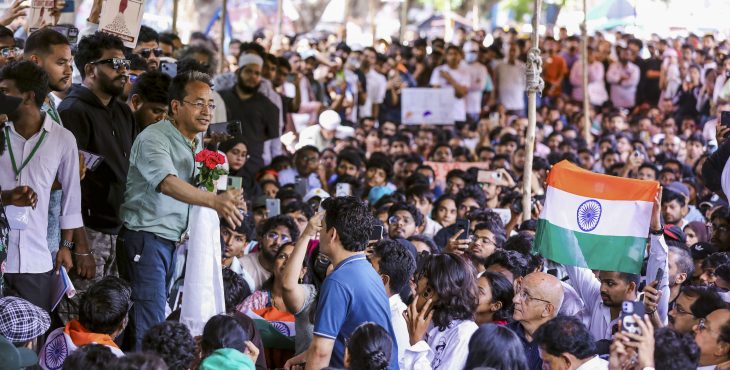
On June 28, 2026, Sonam Wangchuk began an indefinite hunger strike at Jantar Mantar in New Delhi. He joined forces with a youth group called the Cockroach Janta Party (CJP) to protest against major question paper leaks in national entrance exams like NEET-UG.
Key Demands
1. Resignation of the Union Education Minister
2. Systemic changes to stop future paper leaks
3. ₹1 Crore help for families of suicide victims
July 2026: Police Action & Youth Standoff
The Evacuation (July 18): On Day 21 of his hunger strike, Delhi Police cleared the Jantar Mantar stage and forcefully shifted Sonam Wangchuk to the hospital. While the government cited a Delhi High Court directive for medical safety due to dropping vitals, student groups slammed it as a tactical move executed exactly 48 hours before his planned march to Parliament to squash the protest.
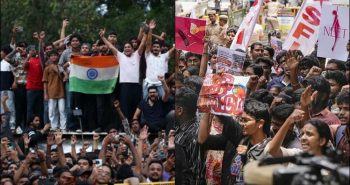
Youngsters Take Charge (July 20): In Wangchuk’s absence, Gen Z students and the CJP took full ownership of the movement. Led by youth leaders and Wangchuk’s wife, Gitanjali Angmo, thousands of students bravely executed the “Chalo Sansad” – (Let’s march to Parliament) . Lutyens’ Delhi turned into a battlefield as peaceful students faced heavy police barricades, a baton charge, and mass detentions of over 70 organizers, including CJP leadership [SAM].
Current Status (July 21): The state crackdown has backfired, fueling greater youth anger. Demonstrators successfully fought back to reclaim the dismantled Jantar Mantar protest site. From his bed, Wangchuk extended his indefinite fast in solidarity with the assaulted youth. In a major win today, the Delhi High Court intervened regarding his confinement, ruling against forced government restrictions and legally allowing Wangchuk to transfer to a private facility of his choice, Medanta Hospital.
The Tamil Nadu Stance: A Shared Battle Against NEET
While Wangchuk is fasting to clean up the corruption in national examinations, his protest has deeply touched readers and students in Tamil Nadu. For years, Tamil Nadu has been the leading state voice warning India about the structural dangers of a single, centralized exam like NEET.
- The Fight for Social Justice: Both Wangchuk’s platform and Tamil Nadu’s anti-NEET bills share a common core value: protecting marginalized rural students. Centralized entrance testing systematically rewards wealthy, urban students who can afford corporate coaching classes, completely wiping out equal opportunities for state-board and underprivileged youth.
The Youth Battle and Wangchuk’s Unyielding Stance
The government’s attempts to suppress the movement have only hardened the resolve of India’s youth. By bravely reclaiming the Jantar Mantar protest site and continuing the street agitation, Gen Z demonstrators and the Cockroach Janta Party (CJP) have proven that this fight is no longer just about one man—it is a full-scale youth revolution for academic survival. From his hospital bed, Sonam Wangchuk’s stance remains completely unshakeable. He is refusing to break his fast until his core demands are met.
As mainstream media networks remain largely silent and the government chooses heavy-handed clampdowns over open dialogue, we salute the incredible courage of India’s youth —wishing these brave student revolutionaries immense strength and resilience as they stand completely unified on the frontlines to defend the academic future of our nation.




No comment yet, add your voice below!